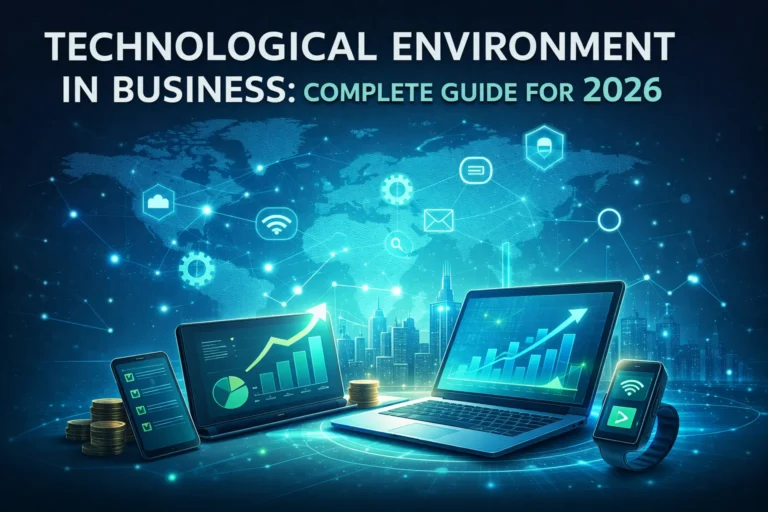
Technological Environment in Business
Technology has become an inseparable part of modern business. The way companies operate, communicate, compete and grow today is strongly influenced by digital tools and advancements. In 2026, understanding the technological environment in business is essential for any organization that wants to stay relevant and competitive. Whether it is artificial intelligence, automation, cloud computing or data analytics, businesses rely on technology to improve efficiency, reduce costs, enhance customer experience and create new opportunities.
This complete guide explains what the technological environment is, how it impacts businesses, why it matters more than ever and how companies of all sizes can adapt to rapid changes. With real examples and simple explanations, this guide will help you understand how technology shapes the future of business.
What Is the Technological Environment in Business?
The technological environment in business refers to the digital tools, innovations, systems and technological trends that influence how companies operate and compete. It includes everything from the software businesses use to the machines they depend on, as well as new technologies that reshape entire industries.
This environment changes rapidly. Technologies that were new five years ago, such as artificial intelligence and automation, have now become essential. At the same time, emerging innovations like blockchain, quantum computing and advanced robotics continue to push companies toward even more transformation.
The technological environment includes three main elements:
- Existing technologies used by companies every day.
- Emerging technologies that may influence future operations.
- Technological changes that create new opportunities or challenges.
When businesses understand this environment, they can make smarter decisions, upgrade systems on time and stay ahead of competitors who fail to adapt.
Why the Technological Environment Matters in 2026?
The importance of the technological environment in business is at its peak in 2026. The global market is more competitive, customer expectations are higher and digital transformation has become unavoidable.
Several reasons explain why the technological environment matters now more than ever.
It affects productivity and efficiency
Businesses that use automation, cloud software and AI tools work faster and more accurately. This improves output while reducing the time and resources needed to complete tasks.
It influences customer experience
Customers expect quick responses, personalized communication and easy access to services. Technology allows businesses to meet these expectations through chatbots, mobile apps, online support and smart recommendation systems.
It determines competitive advantage
Companies that adopt new technologies earlier often gain a strong advantage over competitors. They can reduce costs, deliver better value and respond to market changes faster.
It shapes business strategies
Many companies build long term strategies around digital transformation. Without understanding the technological environment, it is impossible to plan effectively.
Components of the Technological Environment in Business
To understand how technology affects business, we need to explore the different components that make up this environment. Each component plays a unique role in shaping business decisions, operations and growth.
Information Technology Infrastructure
IT infrastructure forms the backbone of modern business operations. It includes hardware, networks, cloud systems, internet connectivity and cybersecurity frameworks. Without a strong IT foundation, companies cannot run applications, store data or support digital operations.
For example, e-commerce companies depend heavily on cloud servers to manage traffic spikes during sales. Banks rely on secure networks to protect customer data. Manufacturers use IT systems to monitor machines and track production. This shows how deeply the technological environment supports daily business activities.
Software and Digital Tools
Software is a major part of the technological environment in business because almost every task depends on applications. Businesses use tools like:
- Customer Relationship Management software
- Accounting and finance systems
- Project management tools
- Human resource management platforms
- Communication apps such as Zoom or Teams
By integrating these digital tools, companies can collaborate more effectively, automate routine tasks and maintain accurate data across departments.
Artificial Intelligence and Machine Learning
AI is one of the most influential technologies in 2026. Businesses use AI to analyze data, predict customer behavior, personalize services, automate decisions and increase accuracy. Machine learning algorithms help detect fraud, optimize marketing campaigns and improve supply chain logistics.
For example, retail companies use AI to forecast product demand, ensuring they always have the right amount of stock. Banks use AI chatbots to answer thousands of customer queries instantly. These examples highlight how AI strengthens the technological environment in business by enabling smarter and faster operations.
You might also like this article: Different Applications of AI
Automation and Robotics
Automation reduces manual effort by letting machines and software handle repetitive work. It increases speed, reduces human error and improves consistency. Robotics plays a huge role in industries like manufacturing, logistics and healthcare.
Automated assembly lines, warehouse robots and robotic arms have become standard. Service sector businesses use automated billing, scheduling and reporting to save time. Automation is especially useful for businesses that want to scale operations without increasing labor costs.
Cloud Computing
Cloud computing is the backbone of modern digital operations. It allows companies to store data, run applications and collaborate without needing physical servers. Cloud systems offer flexibility, reduced costs and better security.
Businesses use cloud platforms for:
- Data storage
- Remote work solutions
- Software as a Service applications
- Backups and disaster recovery
The rise of remote work has made cloud computing a crucial part of the technological environment in business, ensuring that employees can work from anywhere reliably.
Data Analytics and Business Intelligence
Companies generate massive amounts of data every day. Data analytics tools help businesses make sense of that information. These tools analyze trends, customer behavior, sales patterns and operational performance.
For example, an online store can track which products customers view the most, helping the business improve marketing. A logistics company can analyze delivery times to find ways to reduce delays. These insights allow businesses to make data driven decisions.
Cybersecurity
As technology grows, so do cyber threats. Cybersecurity protects business systems from attacks, data breaches and fraud. It includes firewalls, secure networks, encryption and employee training.
Businesses that ignore cybersecurity face risks such as financial loss, damaged reputation and legal consequences. As a result, cybersecurity is now a major part of the technological environment in business, especially for companies that rely heavily on digital operations.
Technological Trends Shaping Business in 2026

The year 2026 brings new trends that influence how businesses operate.
Internet of Things
Smart devices connected to the internet improve monitoring and automation. Factories use IoT sensors to track equipment performance. Retail stores use IoT to monitor inventory.
Blockchain Technology
Blockchain ensures secure transactions and transparent record keeping. Finance, supply chain and real estate industries use blockchain to increase trust and reduce fraud.
You might also like this article: Coinbase vs Blockchain
5G Connectivity
Faster internet speeds improve cloud operations, remote work and communication systems. Businesses can transfer large data sets quickly and support advanced applications.
Quantum Computing (Emerging)
Although still developing, quantum computing offers enormous potential for solving complex business problems faster than traditional computers.
These trends continue to build the technological environment in business, making innovation a constant requirement for success.
How Technology Benefits Different Types of Businesses?
Every business type gains unique advantages from the technological environment.
Small Businesses
Technology helps small businesses compete with larger companies by offering inexpensive tools for marketing, payment handling, customer service and automation.
Retail Businesses
Retailers use mobile apps, digital payment systems, inventory software and AI driven recommendations to enhance customer experience.
Manufacturing Businesses
Manufacturers rely on robotics, IoT sensors and automated systems to improve production efficiency and reduce downtime.
Service Based Businesses
Service companies use scheduling tools, CRM platforms and digital customer support systems to streamline operations.
Online Businesses
E-commerce and digital service companies depend almost entirely on cloud systems, data analytics, AI and automation to manage day to day activities.
Each of these examples shows how the technological environment in business supports growth across all industries.
Challenges Businesses Face in a Rapidly Changing Technological Environment
As technology evolves, businesses must deal with multiple hurdles while trying to stay competitive.
High Costs of Adoption
New digital tools, automation systems and software platforms require significant investment, making it difficult for small and medium businesses to adopt them quickly.
Skill Gaps
Employees may struggle to adjust to new technologies. Continuous training and upskilling are needed, which can take time and additional resources.
Data Privacy Concerns
With more digital operations, businesses must follow strict data protection laws and safeguard customer information to avoid breaches and penalties.
Fast-Changing Trends
Technology evolves rapidly and companies often find it challenging to keep up with new tools, updates and industry standards.
Cybersecurity Risks
As businesses depend more on digital systems, they face higher risks of cyber attacks, requiring strong security measures and constant monitoring.
Careful planning, budgeting and long-term strategy are essential to overcome these challenges without slowing innovation.
How Companies Can Adapt to the Technological Environment?
To remain strong in a competitive market, businesses must respond to technological changes with strategic, long-term actions.
Invest in Digital Transformation
Modern tools and automated systems help improve productivity, reduce errors and bring long-term cost savings.
Train Employees Regularly
Continuous skill development ensures employees know how to use advanced tools, improving efficiency and reducing resistance to change.
Adopt Cybersecurity Best Practices
Strong passwords, security audits, firewalls and employee awareness programs are key to protecting digital assets from cyber threats.
Use Data to Guide Decisions
Data analytics helps companies understand customer behavior, predict market trends and make smart, informed decisions.
Monitor Technological Trends
Staying updated with new technologies ensures the business never falls behind competitors and can adapt to future changes smoothly.
Adapting to the technological environment requires consistent effort and a forward-thinking mindset, not just short-term adjustments.
Final Thoughts
The technological environment in business plays a powerful role in shaping how companies grow, compete and succeed in 2026. From artificial intelligence to cloud computing and automation to cybersecurity, technology influences every business decision and operation. Companies that understand and adapt to this environment remain competitive, productive and forward thinking. Those that ignore it risk falling behind in a rapidly changing world.
Technology will continue to evolve, creating new challenges and opportunities. By staying informed and embracing innovation, businesses can build a strong foundation for long term success.
Helpful Links
Frequently Asked Questions
1. How does technology improve business efficiency?
Automation, AI tools, cloud systems and software applications help complete tasks faster, reduce errors and cut operational costs.
2. How can companies adapt to the technological environment successfully?
They can invest in digital tools, train employees, strengthen cybersecurity, use data for decision making and stay informed about new technologies.
3. How does AI influence the technological environment?
AI helps automate tasks, analyze data, personalize customer experiences and improve decision making, making businesses faster and more efficient.
4. Can small businesses benefit from modern technology?
Yes, small businesses use affordable digital tools like CRM software, online payment systems and automation apps to compete with larger companies.
5. What role does cloud computing play in business growth?
Cloud computing supports remote work, reduces hardware costs, improves data accessibility and allows businesses to scale easily as they grow.