Contribution of Technology in Education
The world of learning has transformed dramatically in the last decade. Schools, colleges and training institutions are no longer confined to chalkboards, printed books and physical classrooms. Today, digital tools, artificial intelligence, cloud platforms and immersive experiences have become central to the learning journey. Understanding the contribution of technology in education is essential for educators, parents, students and anyone who wants to stay relevant in this fast evolving environment.
This complete guide breaks down how technology reshapes teaching methods, improves student outcomes, supports teachers, enhances accessibility and prepares learners for the future. Each section dives deep with real examples, practical insights and future predictions.
Why Technology Is Essential in Education?
The classroom of 2026 looks very different from the classroom of 2000. Students today grow up with smartphones, smart TVs, tablets and high speed internet. Their learning expectations have changed and traditional methods alone cannot keep them engaged.
Technology matters because it transforms how knowledge is delivered, understood and applied. One major contribution of technology in education is the way it helps create dynamic learning environments where students interact with videos, simulations, quizzes and real time feedback instead of passively listening to lectures.
Students Learn Better When Content Matches Their Style
Every student understands concepts differently. Some grasp ideas quickly through visual content, others need repetition and some learn by doing. Digital platforms can automatically adjust lessons based on learning speed and performance. Instead of a one size fits all model, technology brings personalised education for everyone.
Access to Endless Learning Resources
Technology helps students break free from the limitations of textbooks. They can now explore online libraries, academic journals, instructional videos, expert lectures and interactive modules. With these resources available anytime and anywhere, learning becomes continuous rather than restricted to school hours.
Better Collaboration Between Teachers, Students and Parents
Communication has become faster and more organised. Teachers can share assignments, lecture notes and progress reports instantly. Parents can monitor performance through apps. Students can ask doubts even outside school hours. This smooth flow of information greatly improves academic outcomes.
How Educational Technology Evolved Over the Years?
The contribution of technology in education did not appear suddenly. It has been developing gradually over several phases.
The Introduction of Computers in Classrooms
In the early years, computers were used mainly for basic tasks like typing practice, simple calculations and learning fundamental software skills. This marked the beginning of digital education.
Widespread Internet Adoption
With the rise of the internet, students gained access to global information. Schools started using projectors, digital presentations and online referencing. This significantly expanded what teachers could offer inside a classroom.
The Smartphone Revolution
The arrival of smartphones changed learning permanently. Apps, e books, online quizzes, virtual tutoring and learning videos became accessible to millions of students. Now learning could happen anywhere, even while travelling.
Virtual Learning Became Normal
After 2020, online classes became mainstream. Students across the world studied from home and institutions adopted digital tools, cloud storage and virtual classrooms. The flexibility of remote learning continues even in 2026, making it a major part of the education system.
Rise of Artificial Intelligence
AI enabled personalised lessons, automated grading, performance analytics and predictive learning support. This is one of the strongest technological shifts influencing education today.
Key Contribution of Technology in Education in 2026
The impact of digital innovation on learning is huge. Let us look at the areas where the contribution of technology in education is most visible.
1. Personalised and Adaptive Learning
Traditional classrooms teach everyone at the same pace but technology makes it possible to tailor education to each student. Adaptive learning platforms analyse mistakes, track progress and provide customised exercises. This helps slow learners catch up and advanced learners move ahead without waiting.
For example, an AI based maths app can detect topics a student struggles with and offer step by step hints. If a student is strong in a particular chapter, the app automatically unlocks advanced modules. This level of personalisation was impossible earlier.
Another great example is language learning apps that adjust vocabulary levels based on pronunciation, accuracy and speed. Students improve faster because the system adjusts to their needs, not the other way around.
2. Better Student Engagement Through Interactive Tools
A major reason teachers use technology is to increase participation. Visual content, digital whiteboards, animations and gamified quizzes make lessons exciting. When students interact with the lesson instead of only listening, they understand concepts more clearly.
Imagine a biology student exploring the human heart using a 3D model. They can rotate it, zoom in and understand how blood flows in real time. This experience is far more memorable than reading a diagram in a textbook.
Gamified learning, where lessons are turned into challenges or quizzes, keeps students motivated. Many schools use platforms like Kahoot or Quizizz to make tests fun and competitive. This boosts retention and strengthens recall.
3. Growth of Online Learning and Virtual Classrooms
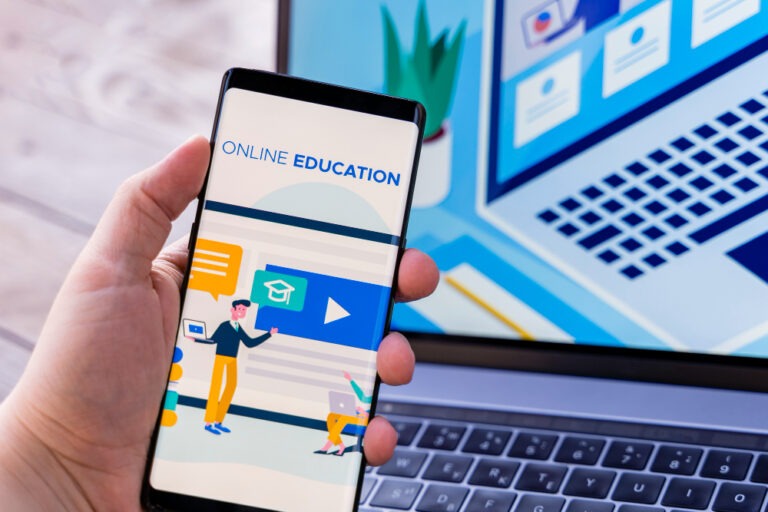
One of the most influential contribution of technology in education is the rise of online learning. Virtual classrooms allow students to attend lessons from anywhere. Working professionals can pursue certifications without quitting jobs. Students from rural areas can learn from top educators around the world.
Online learning offers flexibility that traditional education cannot match:
- Students can replay recorded lectures.
- Assignments can be submitted digitally.
- Teachers can conduct polls and quizzes in real time.
- Collaborative projects can happen online.
Virtual breakout rooms help students work in groups and screen sharing allows teachers to explain concepts clearly. Online learning has become an essential part of modern education, not just an optional method.
4. Empowering Teachers With Smart Tools
Technology does not replace teachers. It strengthens their abilities and reduces their workload. Teachers today use digital gradebooks, automated evaluations, AI based question generators, plagiarism checkers and attendance systems. These tools save hours of manual work.
For example, an English teacher can upload essays to an AI system that checks grammar, readability and plagiarism within seconds. A maths teacher can use analytics dashboards to identify which students need extra support.
This efficiency is a strong contribution of technology in education because it allows teachers to focus more on interacting with students rather than managing paperwork.
5. Global Access to Knowledge and Expertise
Technology removes physical and economical barriers. Students can now learn from:
- International universities
- Global tutors
- Webinars hosted by industry experts
- Online communities and study groups
A student in India can attend an astronomy workshop taught by a NASA scientist. A child in Africa can learn coding from an expert in Europe. This global exposure improves confidence, skills and career opportunities.
Schools also collaborate with institutions worldwide through digital exchange programs, virtual debates and online competitions. Such activities prepare students for a global future.
6. Real Time Assessment and Feedback
Instant feedback is extremely important for improvement. Earlier, students waited days or weeks for teachers to check their answer sheets. Today, AI driven platforms can evaluate responses instantly and offer hints or corrections.
Teachers also benefit from detailed analytics. They can see who is falling behind, which questions students struggle with and how effective their teaching methods are. Real time feedback enhances the learning cycle and makes corrections faster.
7. Making Education Accessible for Everyone
A powerful contribution of technology in education is the way it supports students with disabilities or learning challenges. Assistive technologies ensure that learning is inclusive.
Examples include:
- Screen readers for visually impaired students
- Subtitles for hearing impaired learners
- Digital textbooks with adjustable font sizes
- Touchscreen devices for students with mobility issues
- Speech to text tools for those who cannot type easily
Technology empowers every student, regardless of their limitations and creates a fair learning environment.
Emerging Technologies That Will Shape the Future of Education
Education in 2026 is only the beginning. Several advanced technologies are expected to revolutionise learning even more.
Artificial Intelligence
AI will soon act as a personal tutor for every student. It will guide them through lessons, predict difficulties, answer doubts instantly and adapt the curriculum based on performance. This individualised support is a massive boost to learning outcomes.
You might also like this article: Different Applications of Ai
Virtual and Augmented Reality
VR and AR are changing the way practical subjects are taught. Students can walk inside a volcano, explore the solar system or visit ancient civilizations without leaving the classroom. Medical students can practice surgeries virtually, reducing mistakes before entering real hospitals.
Robotics and Automation
Robotics labs teach young learners coding, engineering and problem solving. Automated systems will handle more administrative tasks, allowing institutions to run smoothly and efficiently.
Cloud Based Learning
Cloud platforms allow schools to store all materials online. Students can access them from any device. Group projects become easier and teachers can update notes instantly.
Data Driven Education
Institutions increasingly rely on analytics to track attendance, performance and teaching quality. This helps them improve curriculum design and overall student experience.
Real Examples Showing How Technology Is Transforming Classrooms
Smart Boards and Interactive Displays
Many schools now use large digital screens that allow teachers to write, draw, display videos and interact with content. Students can answer questions through touchscreen panels making classes lively.
Online Homework Platforms
Apps like Google Classroom and Microsoft Teams allow teachers to assign homework, track submissions and grade digitally. Students stay organised and parents can monitor progress easily.
Virtual Labs
Science labs are expensive and sometimes unsafe for beginners. Virtual labs allow students to perform experiments digitally, repeat them multiple times and learn safely.
Coding and STEM Programs
Schools are increasingly teaching programming through robotics kits and coding software. These skills prepare students for future careers in AI, IoT and engineering.
These examples highlight the growing contribution of technology in education across all school activities.
Challenges That Still Need Attention
Technology offers tremendous benefits but a few challenges continue to exist.
The Digital Divide
Not every student has access to devices or high speed internet. This creates learning gaps that need to be addressed through government and institutional support.
Too Much Screen Time
Prolonged digital usage affects eyesight, posture and concentration. Schools need balanced approaches that combine technology with physical activities.
Cybersecurity and Data Privacy
Institutions must protect student data from cyber threats. Secure systems and digital ethics training are necessary.
Teacher Readiness
Not all teachers feel confident using advanced tools. Continuous training programs are essential to help them adapt.
Addressing these issues will improve the effectiveness of technology in learning environments.
What the Future of Learning Will Look Like?
Education beyond 2026 will be more immersive, intelligent and personalised. Students will rely on AI tutors, interactive simulations and global learning networks. Traditional textbooks may become fully digital and exams might shift to skill based evaluations.
The world is moving toward a model where students learn at their own pace with guidance from both teachers and smart systems. This progress reinforces the long term contribution of technology in education and its role in shaping future generations.
Final Thoughts
Technology has become a backbone of modern learning. It enhances teaching, empowers students, improves accessibility and unlocks global opportunities. With constant innovation, the contribution of technology in education will expand further and continue transforming how knowledge is delivered and experienced.
As classrooms evolve, embracing technology is not optional anymore. It is the key to creating smarter learners, supportive teachers and future ready institutions.
Helpful articles
https://theirworld.org/resources/technology-and-education/
https://techyforever.com/tech-trends/role-of-technology-in-modern-education/
Frequently Asked Questions
1. What role does AI play in modern education?
AI helps automate grading, recommend personalized learning paths and provide real time assessments. It also acts as a virtual tutor that assists students with explanations, practice problems and performance tracking.
2. How does technology help teachers?
Teachers use digital tools to streamline tasks like attendance, grading, content creation and classroom management. Technology saves time and helps teachers focus more on student engagement and academic support.
3. Is technology suitable for all types of learners?
Yes, because it supports diverse learning needs. Visual learners benefit from videos, auditory learners from podcasts and interactive tools help kinesthetic learners. Assistive technologies also support students with disabilities, making education more inclusive.
4. Can technology replace traditional classroom teaching?
Technology enhances traditional teaching but cannot replace the role of teachers. Human interaction, guidance, mentorship and emotional support are essential parts of education that technology cannot fully replicate.