Best Laptop for Hacking and Cybersecurity
The world of ethical hacking and cybersecurity is growing fast. From bug bounty hunting and penetration testing to learning Kali Linux and securing enterprise networks, the tools you use matter a lot. One of the most important tools is your laptop. Choosing the best laptop for hacking is not about flashy design or gaming looks. It is about power, compatibility, portability and long term reliability.
In this detailed guide, I will help you understand what makes a laptop suitable for hacking and cybersecurity and then walk you through the top 8 laptops you can confidently choose in 2026. This article is written in simple language so even beginners can understand, while still offering value for advanced users.
What Makes a Laptop Good for Hacking and Cybersecurity
Before jumping into recommendations, it is important to know what ethical hackers and cybersecurity professionals actually need from a laptop.
Operating System Compatibility
Most hackers use Linux based systems like Kali Linux, Parrot OS or Ubuntu. Your laptop should support dual booting or virtual machines smoothly. Hardware compatibility with Linux is critical, especially WiFi cards and drivers.
Processor Performance
Tasks like password cracking, running multiple tools and virtual machines require a strong CPU. Intel i7, i9 or AMD Ryzen 7 and Ryzen 9 processors are preferred.
RAM Capacity
Cybersecurity tools consume a lot of memory. Running Burp Suite, Metasploit, browsers and virtual machines together needs at least 16GB RAM. For advanced work, 32GB is ideal.
Storage Speed and Size
SSD is non negotiable. NVMe SSDs significantly improve performance when launching tools or loading wordlists. A minimum of 512GB is recommended.
WiFi Card Support
This is one of the most overlooked aspects. Ethical hackers often need monitor mode and packet injection. Some internal WiFi cards support this but many professionals still use external adapters.
Understanding these basics helps you identify the best laptop for hacking based on real requirements not marketing hype.
1. Dell XPS 15 2026 Edition
The Dell XPS series has always been popular among developers and security professionals.
Key Specifications
- Intel Core Ultra 7 or Ultra 9
- Up to 32GB RAM
- 1TB NVMe SSD
- 15.6 inch OLED display
Why It Is Good for Hacking
The Dell XPS 15 offers excellent Linux compatibility and powerful performance. It handles multiple virtual machines smoothly and the keyboard is comfortable for long coding sessions. Battery life is also impressive, which is useful during travel or field testing.
Who Should Buy It
If you want a premium laptop that balances power and portability this is a strong option for cybersecurity students and professionals.
2. Lenovo ThinkPad X1 Carbon Gen 13
ThinkPads are legendary in the cybersecurity community.
Key Specifications
- Intel Core Ultra 7
- 16GB or 32GB RAM
- 1TB SSD
- Lightweight carbon fiber body
Why It Is Good for Hacking
ThinkPads are known for their excellent Linux support. Kali Linux and Ubuntu run almost flawlessly. The keyboard is one of the best in the industry, which matters when writing scripts or commands for hours.
Many professionals consider it close to the best laptop for hacking because of its stability and build quality.
Who Should Buy It
Perfect for penetration testers, red teamers and corporate security professionals who value reliability.
3. Apple MacBook Pro M4
Apple Silicon has changed the game.
Key Specifications
- Apple M4 Pro or M4 Max
- 18GB to 36GB unified memory
- 1TB SSD
- Outstanding battery life
Why It Is Good for Hacking
macOS is Unix based, which makes it friendly for security tools and scripting. Virtualization tools like UTM and VMware work well for running Linux distributions. The performance per watt is unmatched.
Limitations
Not all hacking tools run natively on macOS. You will rely heavily on virtual machines.
Who Should Buy It
Best for developers and security researchers who also need macOS for other work.
4. ASUS ROG Zephyrus G16
Gaming laptops often double as excellent hacking machines.
Key Specifications
- Intel Core i9 or AMD Ryzen 9
- Up to 32GB RAM
- Dedicated GPU
- High refresh rate display
Why It Is Good for Hacking
This laptop offers raw power. GPU acceleration helps in password cracking tasks. Running multiple VMs is effortless. Although marketed as a gaming laptop, it performs exceptionally for cybersecurity tasks.
If performance is your top priority, it easily qualifies as a best laptop for hacking contender.
Who Should Buy It
Advanced users, bug bounty hunters and those working with heavy workloads.
5. System76 Lemur Pro
System76 laptops are built specifically for Linux users.
Key Specifications
- Intel Core Ultra 7
- Up to 40GB RAM
- NVMe SSD
- Pop OS preinstalled
Why It Is Good for Hacking
This laptop comes with Linux out of the box. No driver issues, no setup headaches. Everything works perfectly with Kali Linux and other security distributions.
For Linux lovers, this is often considered the best laptop for hacking straight away.
Who Should Buy It
Students and professionals who want a pure Linux experience without compromises.
6. HP Spectre x360 16
A powerful 2 in 1 laptop with premium design.
Key Specifications
- Intel Core Ultra 7
- Up to 32GB RAM
- OLED touchscreen
- Convertible design
Why It Is Good for Hacking
The Spectre x360 offers strong performance and excellent build quality. It runs Linux well with some tweaks. The touchscreen can be useful for presentations and learning environments.
Who Should Buy It
Cybersecurity learners who want a flexible laptop for both work and study.
7. MSI Creator Z17 HX Studio
This laptop is designed for professionals who need serious power.
Key Specifications
- Intel Core i9
- Up to 64GB RAM
- NVIDIA RTX GPU
- Large high resolution display
Why It Is Good for Hacking
Massive RAM capacity and GPU power make it suitable for intensive tasks like reverse engineering and password cracking. It handles multiple environments without slowing down.
For power users, it stands strong as the best laptop for hacking options in 2026.
Who Should Buy It
Security researchers, digital forensics experts and advanced ethical hackers.
8. Acer Swift X 14
A budget friendly yet powerful option.
Key Specifications
- AMD Ryzen 7
- 16GB RAM
- 512GB SSD
- Dedicated GPU
Why It Is Good for Hacking
This laptop offers excellent value for money. It runs Kali Linux smoothly and supports virtualization well. While not as premium as others it gets the job done.
Who Should Buy It
Beginners and students looking for an affordable entry into cybersecurity.
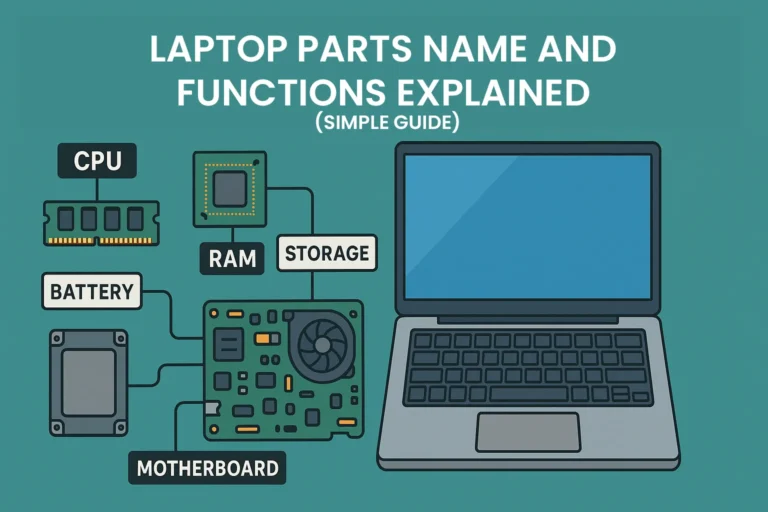
You might also like this article: Laptop Parts Name and Their Function
How to Choose the Best Laptop for Your Hacking Needs?
Not everyone has the same requirements. Here is how to decide.
Beginners
Focus on Linux compatibility at least 16GB RAM and SSD storage. Avoid very cheap laptops with poor build quality.
Intermediate Users
Look for stronger CPUs and better thermal management. Virtual machines should run smoothly.
Advanced Professionals
Prioritize RAM, CPU cores and GPU power. Reliability matters more than looks.
Choosing the best laptop for hacking depends on how deep you plan to go into cybersecurity.
Recommended Accessories for Ethical Hackers
Even the best laptop needs support.
- External WiFi adapter with monitor mode
- Portable SSD for data storage
- Cooling pad for long sessions
- External keyboard for comfort
These tools enhance your overall workflow.
You might also like this article: Types of Processors in Computer
Final Thoughts
Cybersecurity is a skill driven field but the right hardware can significantly boost your productivity and learning speed. Whether you are a student starting with Kali Linux or a professional penetration tester, investing in the best laptop for hacking is a smart decision for 2026 and beyond.
Focus on performance, Linux support and future proofing rather than brand names. With the right laptop and consistent practice you can build a strong career in ethical hacking and cybersecurity.
Frequently Asked Questions
1. What is the minimum RAM required for a hacking laptop?
For basic ethical hacking and learning tools, 16GB RAM is recommended. Advanced users running multiple virtual machines should consider 32GB.
2. Is Linux mandatory for ethical hacking?
Linux is not mandatory but it is highly preferred because most hacking tools are built for Linux based systems like Kali Linux and Parrot OS.
3. Can I use a gaming laptop for hacking?
Yes, gaming laptops work very well for hacking because they have powerful CPUs, GPUs and good cooling, which help with heavy cybersecurity tasks.
4. Do I need a dedicated GPU for hacking?
A dedicated GPU is not required for beginners but it is useful for tasks like password cracking and advanced security research.
5. Which processor is better for hacking, Intel or AMD?
Both Intel and AMD processors perform well. The key is to choose a recent generation Intel i7 or AMD Ryzen 7 or higher.
6. Is MacBook good for ethical hacking and cybersecurity?
MacBooks are good for learning and development but some tools require virtual machines. They are best suited for users comfortable with macOS and Linux VMs.
About the Author