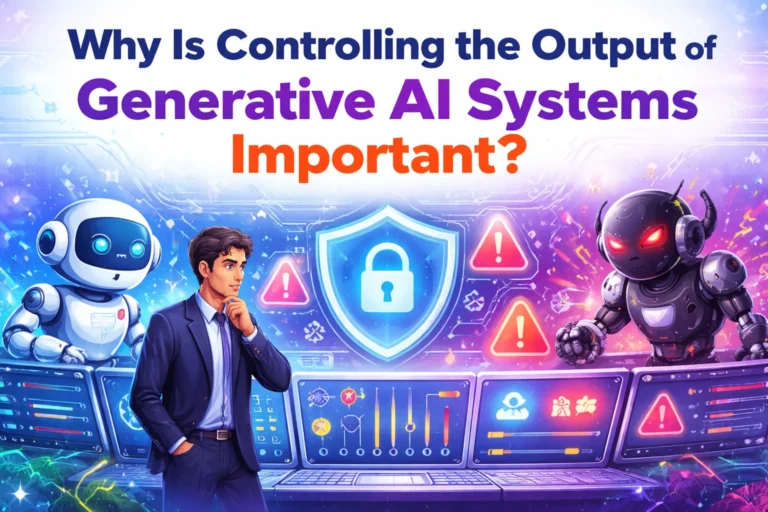
Why Is Controlling the Output of Generative AI Systems Important
Generative AI systems have changed how people create content, write code, design images, generate videos and even make business decisions. Tools powered by artificial intelligence can now produce human-like text, realistic images and automated responses within seconds. While this progress is impressive, it also raises an important question that businesses, governments and users must address: why is controlling the output of generative AI systems important?
Uncontrolled AI output can cause misinformation, bias, legal problems, security risks and ethical concerns. As AI systems become more powerful and accessible, controlling what they generate becomes critical for safety, trust and long term adoption. This article explains in detail why output control matters, how it impacts real world use cases and what happens when generative AI systems are left unchecked.
Understanding Generative AI and Its Output
Generative AI refers to systems that create new content instead of simply analyzing existing data. These systems learn patterns from large datasets and generate outputs such as text, images, audio or code based on prompts.
Examples include:
- Chatbots generating answers and advice
- Image generators creating realistic visuals
- Code generators writing software scripts
- Video and voice generators producing media
The output produced by these systems may look confident and authoritative, even when it is incorrect or misleading. This is one of the key reasons in controlling the output of generative AI systems important for both individuals and organizations.
The Risk of Misinformation and False Content
One of the biggest dangers of uncontrolled AI output is the spread of misinformation. Generative AI systems do not truly understand facts. They predict words based on patterns, which means they can generate content that sounds correct but is completely wrong.
For example, an AI system might confidently provide incorrect medical advice, outdated legal information or false historical details. If users trust these outputs blindly, it can lead to serious consequences.
This explains why is controlling the output of generative AI systems important in sensitive areas like healthcare, education, law and finance. Without proper checks, AI generated misinformation can spread faster than humans can correct it.
Preventing Harmful and Unsafe Content
Generative AI systems can unintentionally produce harmful content if not properly controlled. This may include hate speech, violent or abusive language, discriminatory statements or encouragement of illegal activities.
Even if these outputs are unintentional the damage can be real. Platforms that allow such content risk losing trust and facing legal consequences.
Content moderation rules, safety filters and ethical guidelines help reduce these risks. That is another strong reason why is controlling the output of generative AI systems important for public facing platforms and applications.
Bias and Fairness in AI Generated Output
Bias is one of the most challenging issues in artificial intelligence. Because AI learns from human created data, it can reflect social and cultural biases present in that data.
If not controlled, generative AI may reinforce stereotypes, show unfair preferences or marginalize certain groups. For example, biased outputs in hiring advice, education recommendations or content moderation can have long lasting social consequences.
Output control allows developers to detect and reduce bias ensuring more balanced and inclusive responses. This is essential for building technology that benefits everyone rather than amplifying existing inequalities.
Legal and Compliance Risks
Uncontrolled AI output can expose organizations to legal risks. AI systems may generate content that violates copyright laws, privacy regulations or industry specific compliance rules.
For instance, an AI tool might reproduce copyrighted material, reveal personal information or provide advice that breaches regulatory guidelines. In regulated sectors like healthcare, finance or education, such mistakes can result in heavy penalties.
By controlling AI output, organizations can ensure compliance with laws and reduce legal exposure. This practical necessity further reinforces why responsible output management is critical.
Protecting Brand Reputation and Trust
Businesses increasingly use generative AI for customer support, marketing and content creation. While this improves efficiency, it also creates risks.
An AI system that generates inappropriate, misleading or offensive content can quickly damage a brand’s reputation. Customers may lose trust if they receive incorrect information or feel disrespected by automated responses.
For example, an AI chatbot giving wrong refund policies or insensitive replies can lead to customer complaints and negative reviews. This is why controlling the output of generative AI systems is important for maintaining brand consistency and customer trust.
Security and Data Protection Concerns
Generative AI systems sometimes interact with sensitive data. Without strict controls there is a risk that confidential information could appear in generated responses.
This includes personal user data, internal business information or system level details. In enterprise environments, such leaks can lead to severe financial and security consequences.
Output restrictions and data access controls help prevent accidental disclosure. From a cybersecurity perspective, controlling AI output is essential to protecting digital assets.
Impact on Decision Making and Human Judgment
Many organizations rely on AI generated insights to support decision making. However AI output should assist humans not replace human judgment.
If decision makers blindly trust AI outputs without understanding their limitations it can lead to poor outcomes. For example:
- AI generated forecasts may overlook real world context
- Automated recommendations may ignore ethical factors
- Over reliance on AI may reduce critical thinking
Controlling output helps position AI as a support tool rather than an authority. It encourages human oversight and responsible decision making, which is essential in high impact scenarios.
Ethical Responsibility and Accountability
AI systems do not have moral awareness. Humans are responsible for how these systems are designed, deployed and controlled. Without accountability harmful outputs can be blamed on technology instead of addressing real responsibility.
Ethical AI development requires:
- Clear guidelines for acceptable output
- Transparency in AI behavior
- Accountability for misuse or harm
Organizations must take responsibility for AI behavior, which directly answers the question why is controlling the output of generative AI systems important from an ethical standpoint.
You might also like this article: Responsibility of Developers Using Generative AI
Real World Examples of Uncontrolled AI Output
Understanding real scenarios helps explain the importance of output control.
In some cases, AI chatbots have provided unsafe medical advice. In others, image generators have produced copyrighted or offensive visuals. There have also been incidents where AI systems generated false news articles that went viral.
These incidents demonstrate that AI output is not just theoretical content. It has real consequences in the real world. Learning from these examples shows why strong control mechanisms are necessary before scaling AI systems.
How Output Control Is Implemented in Generative AI?
Controlling AI output is not about limiting innovation. It is about guiding systems responsibly. Common methods include:
- Content moderation filters
- Prompt restrictions and validation
- Human review and feedback loops
- Ethical training data selection
- Continuous monitoring and updates
These techniques help ensure AI outputs remain safe, accurate and aligned with intended use.
Balancing Creativity and Control
Some worry that controlling AI output limits creativity. In reality, boundaries often improve trust and usability. When users feel safe using AI adoption increases.
Well controlled systems can still generate creative ideas, assist with complex tasks and adapt to user needs. The difference is that they do so within ethical and practical limits.
The Role of Governments and Regulations
Governments around the world are beginning to regulate AI systems. These regulations often focus on transparency, safety and accountability.
Future AI laws may require:
- Disclosure of AI generated content
- Restrictions on high risk outputs
- Audits of AI systems
Compliance with regulations depends heavily on effective output control mechanisms. This adds another critical layer to the importance of responsible AI deployment in the global technology landscape.
User Responsibility and Awareness
While developers and companies carry significant responsibility users also play an important role in the responsible use of generative AI. Understanding that AI generated responses are not always accurate or complete helps users avoid blind trust and overreliance.
When people are aware of system limitations, they are more likely to question outputs, seek verification and apply human judgment. Educating users about how AI works, where it can fail and when expert input is required promotes safer usage and reduces the risk of misinformation spreading across society.
You might also like this article: Will AI Become Advanced Enough to Write Good Application Essays?
Final Thoughts
Generative AI is a powerful technology that offers immense benefits across industries. However, power without control can lead to serious risks. From misinformation and bias to legal issues and reputational damage the consequences of unchecked AI output are significant.
Understanding why is controlling the output of generative AI systems important helps individuals, businesses and governments use AI responsibly. Output control ensures safety, fairness, trust and long term success. When implemented correctly, it allows generative AI to remain creative, helpful and beneficial without causing harm.
As AI continues to shape the future responsible output control will remain one of the most critical pillars of ethical and effective AI deployment.
Helpful Articles
https://www.ibm.com/think/insights/10-ai-dangers-and-risks-and-how-to-manage-them
Frequently Asked Questions
1. What does controlling the output of generative AI mean?
It refers to setting clear rules and safeguards that guide what an AI system is allowed to generate. This helps prevent harmful, biased or unsafe content and ensures the responses follow ethical standards and legal requirements.
2. Can generative AI provide incorrect or misleading information?
Yes, it can. Generative AI may produce answers that sound accurate and confident even when the information is incomplete, outdated or wrong. This is why users should always verify critical information especially in sensitive areas.
3. Does controlling AI output limit creativity or innovation?
No. Responsible limits actually help AI systems remain useful and trusted. Creativity can still exist, but within boundaries that prevent ethical, legal or safety issues.
4. Who is responsible if an AI system causes harm?
The responsibility falls on the organizations and individuals who design, deploy and manage the AI system. Clear accountability and ongoing monitoring are essential to prevent misuse and reduce risks.