Skills Needed for IT Jobs
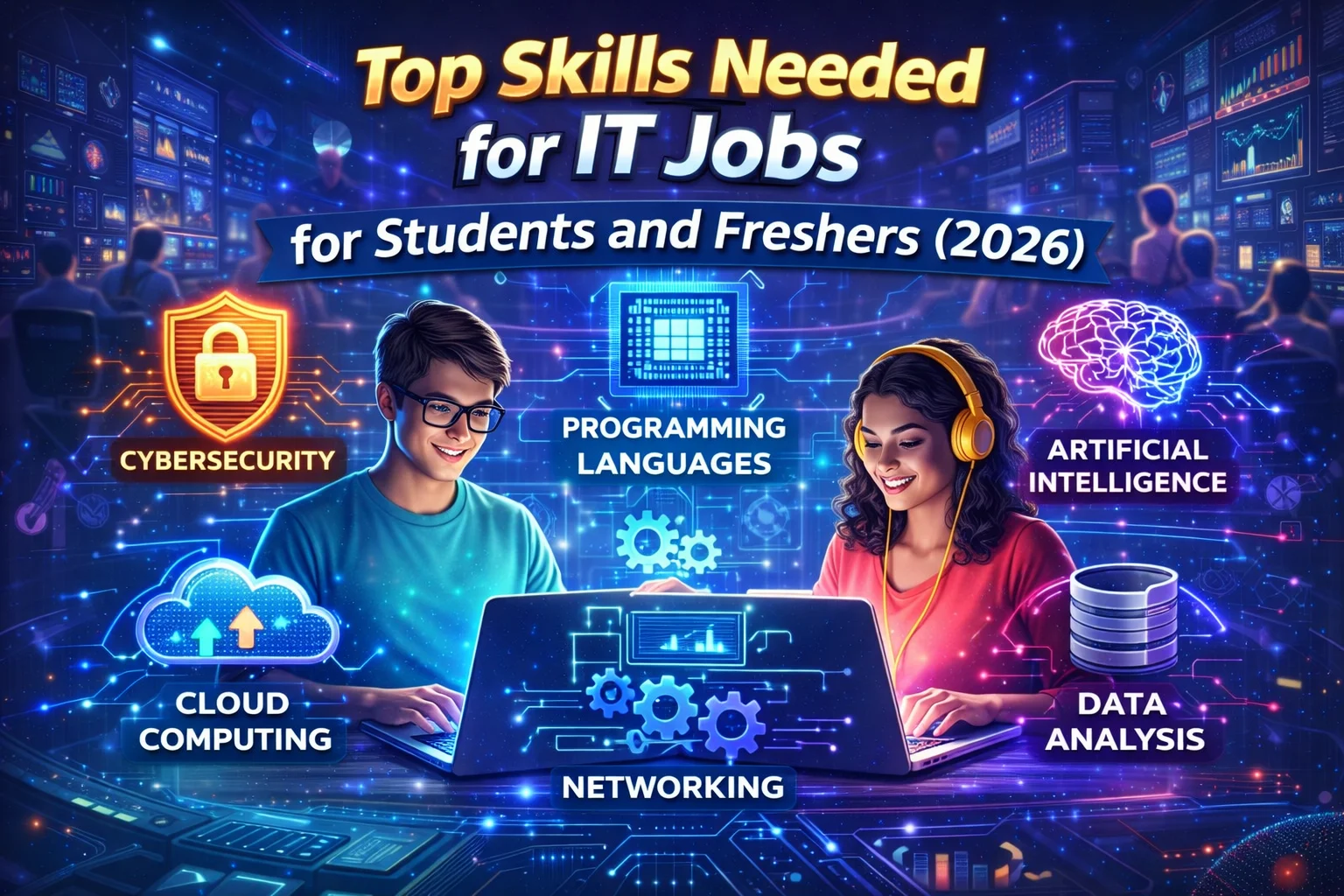
The IT industry is growing faster than ever, creating huge career opportunities for students and freshers across the world. However, simply having a degree is no longer enough to secure a good job. Companies are now looking for candidates who have the right mix of technical knowledge, practical experience and soft skills. This is why understanding the skills needed for IT jobs has become extremely important in 2026.
Whether you are a student planning your career or a fresher trying to enter the IT sector, learning the right skills at the right time can completely change your future. In this detailed guide, we will explore the most important skills, why they matter and how you can start learning them step by step.
Why Skills Matter More Than Degrees in IT Careers
Earlier, IT companies focused heavily on degrees and academic scores. Today, the situation has changed. Many employers care more about what you can do rather than what certificate you hold. Practical ability, problem solving and adaptability matter more than ever.
Technology changes quickly. New tools, languages and platforms emerge every year. Students who focus only on theory often struggle in real world projects. That is why developing the right skills needed for IT jobs is the key to staying relevant and employable.
Core Technical Skills Every IT Student Must Learn
Programming and Coding Skills
Programming is the backbone of most IT roles. Even non developer roles benefit from basic coding knowledge. Languages like Python, Java, JavaScript and C++ are widely used across industries.
For example, Python is popular in data science, automation and AI, while Java is widely used in enterprise applications. Learning at least one programming language deeply will give students a strong foundation.
Among the most essential skills needed for IT jobs, coding helps you understand logic, structure and how software actually works.
Web Development Skills
Web development remains one of the most in demand areas in IT. It includes front end technologies like HTML, CSS and JavaScript and back end technologies such as Node.js, PHP or Python frameworks.
Freshers who can build real websites or web applications have a clear advantage during interviews. Even basic web development knowledge opens doors to roles like web developer, UI developer and software engineer.
These are highly practical skills for IT jobs because almost every business today needs an online presence.
Database and Data Management Skills
Every IT system relies on data. Understanding how data is stored, managed and retrieved is extremely important. Students should learn SQL and basics of databases like MySQL, PostgreSQL or MongoDB.
Knowing how to write queries, manage tables and handle large datasets is one of the underrated skills needed for IT jobs that recruiters value highly.
For example, a software developer who understands databases can build more efficient and secure applications.
Trending & Emerging Technical Skills for IT Jobs in 2026
Artificial Intelligence and Machine Learning Basics
AI and machine learning are transforming industries like healthcare, finance, education and marketing. While not every fresher needs to become an AI expert, having basic knowledge is a big advantage.
Understanding concepts like machine learning models, data training and automation tools is becoming part of the modern skills needed for IT jobs.
Students can start with simple projects like prediction models or chatbots to build confidence.
Cloud Computing Skills
Cloud platforms such as AWS, Microsoft Azure and Google Cloud are widely used by companies to host applications and manage data. Learning cloud basics is essential for freshers entering IT roles.
Cloud skills help students understand deployment, scalability and system architecture. These skills for IT jobs are especially useful for roles like cloud engineer, DevOps engineer and system administrator.
Cybersecurity Fundamentals
With the increase in digital data, cybersecurity has become a major concern. IT professionals are expected to understand basic security practices even if they are not security specialists.
Knowledge of network security, data protection and ethical hacking basics adds strong value to your profile. Cybersecurity awareness is now considered one of the critical skills needed for IT jobs in 2026.
Soft Skills That IT Recruiters Look For
Communication Skills
Many students underestimate the importance of communication. In reality, IT professionals spend a lot of time explaining ideas, writing emails, attending meetings and collaborating with teams.
Good communication skills help you explain technical concepts clearly to non technical people. This is one of the most important skills needed for IT jobs, especially for freshers.
Problem Solving and Logical Thinking
IT jobs often involve fixing bugs, optimizing systems or building solutions from scratch. Employers want candidates who can think logically and solve problems independently.
Practicing coding challenges, puzzles and real life case studies can improve your problem solving ability. These skills for IT jobs are tested heavily during interviews.
Teamwork and Collaboration
Most IT projects are completed by teams, not individuals. Freshers must learn how to work with different people, accept feedback and contribute positively.
Teamwork is a soft skill, but it directly impacts job performance. Strong collaboration abilities are among the essential skills needed for IT jobs today.
Practical Skills That Improve Job Readiness
Version Control Systems
Tools like Git and GitHub are widely used in software development. They help track code changes and allow teams to work together efficiently.
Understanding version control is one of the practical skills needed for IT jobs that many freshers ignore but recruiters notice immediately.
Internship and Project Experience
Doing internships and building personal projects helps students apply theoretical knowledge to real problems. Recruiters prefer candidates who can show actual work instead of just listing skills.
Practical exposure strengthens both technical and professional skills for IT jobs, making freshers more confident and job ready.
Time Management and Discipline
IT jobs often involve deadlines, multitasking and long term projects. Managing time effectively helps freshers stay productive and reduce stress.
Time management may seem simple, but it is one of the often overlooked skills needed for IT jobs that directly affects performance.
How Students and Freshers Can Start Learning These Skills?
The good news is that most skills needed for IT jobs can be learned online at low or no cost. Platforms like online courses, coding practice websites and open source projects offer excellent learning opportunities.
Students should focus on consistent learning rather than trying to master everything at once. Start with one core skill, practice regularly and slowly expand into related areas.
Building a habit of continuous learning is one of the smartest skills for it jobs that will benefit you throughout your career.
Common Mistakes Students Make While Preparing for IT Jobs
Many students try to learn too many skills at once without mastering any. Others focus only on theory and avoid practical work. Some rely completely on college syllabus and ignore industry trends.
Avoiding these mistakes helps you develop the right skills needed for IT jobs in a structured and effective way.
Future Outlook of IT Careers in 2026
The IT industry will continue to grow, but competition will also increase. Automation and AI will change job roles, but they will also create new opportunities.
Students who focus on learning relevant skills and updating themselves regularly will always stay ahead.
Adaptability, curiosity and willingness to learn new technologies will define successful IT professionals in the coming years.
Final Thoughts
Building a successful IT career is not about learning everything, but about learning the right things. By focusing on technical skills, soft skills and practical experience, students and freshers can significantly improve their job prospects.
The demand for professionals with the right skills needed for IT jobs will only increase in 2026 and beyond. Start early, practice consistently and stay curious. With the right approach, IT careers can offer stability, growth and long term success.
Frequently Asked Questions
1. What are the most important skills needed for IT jobs in 2026?
The most important skills needed in 2026 include programming, problem solving, communication skills, basic knowledge of cloud computing and understanding of cybersecurity fundamentals. Along with technical skills, employers also value teamwork and adaptability.
2. Can students get IT jobs without strong coding skills?
Yes, students can get IT jobs without deep coding knowledge, depending on the role. Positions like IT support, system administration, testing and digital operations require basic coding understanding but focus more on technical knowledge, troubleshooting and communication skills for IT jobs.
3. How can freshers start learning skills for IT jobs?
Freshers can start learning skills for IT jobs by taking online courses, practicing coding on learning platforms, working on small projects and participating in internships. Consistent practice and real world experience help build confidence and job readiness.
4. Are soft skills really important for IT careers?
Yes, soft skills are extremely important for IT careers. Communication, problem solving, time management and teamwork are essential skills needed for IT jobs because professionals often work in teams and interact with clients and non technical stakeholders.
5. Which technical skills are easiest for beginners to learn?
For beginners, easy technical skills include basic programming in Python, web development fundamentals, database basics using SQL and understanding version control systems.
About the Author