
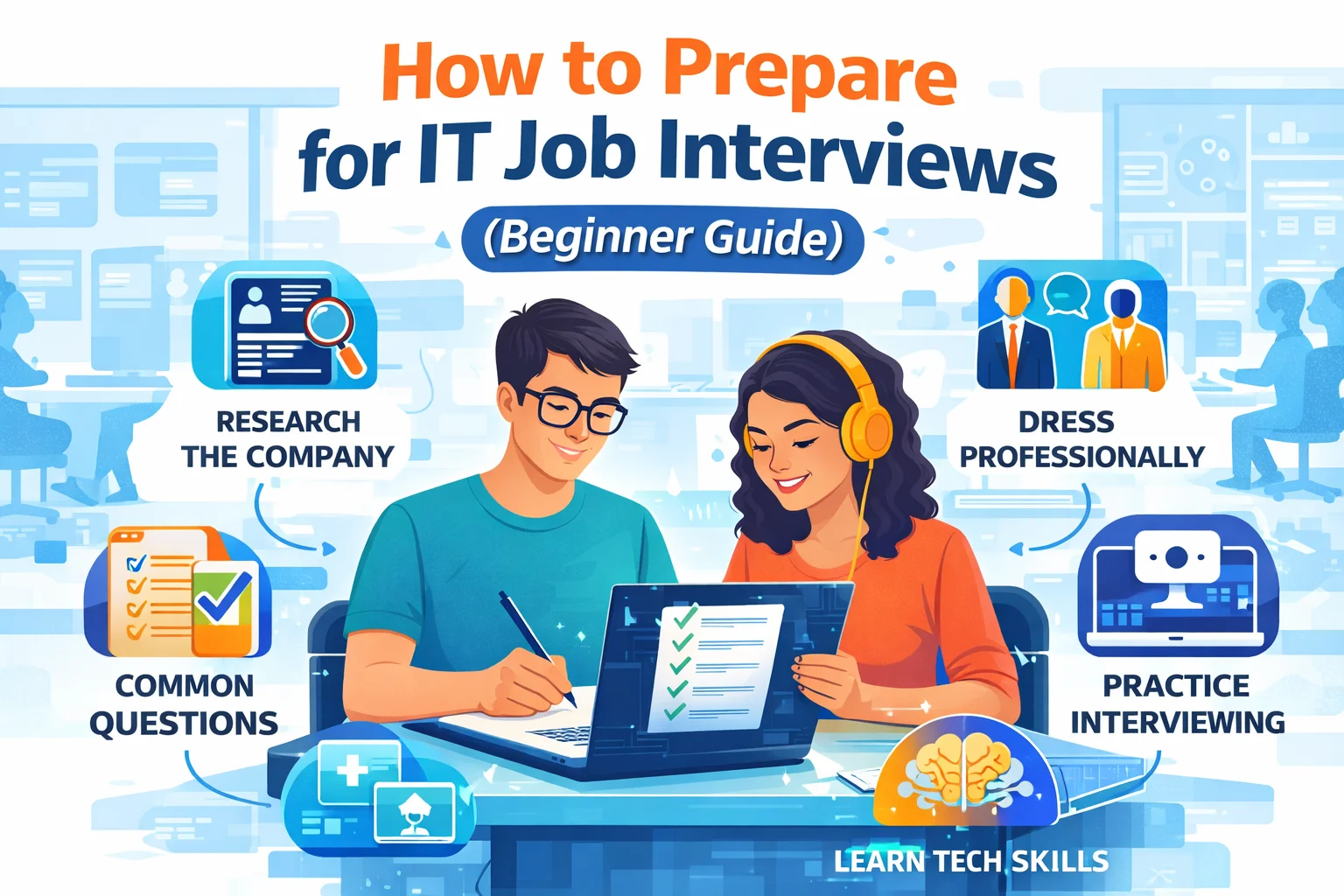
Preparing for an IT job interview can feel confusing and overwhelming, especially if you are a student or fresher. There are so many technologies, job roles, interview patterns and expectations that beginners often do not know where to start. This is why learning how to prepare for IT jobs in a structured and practical way is extremely important.
In 2026, IT companies are not only testing technical knowledge. They also look at problem solving ability, communication skills, confidence and willingness to learn. This beginner guide will walk you step by step through everything you need to know about IT job interview preparation, from understanding job roles to cracking technical and HR rounds.
Understanding the IT Job Market Before Interview Preparation
Before you start preparing for interviews, you must understand the IT job market. Many beginners make the mistake of preparing randomly without knowing which role they are targeting.
IT jobs include roles such as software developer, web developer, data analyst, system administrator, tester, cloud engineer and technical support executive. Each role requires a different skill set.
When preparing for IT jobs, the first step is to choose one or two job roles based on your interest, background and strengths. Focused preparation always gives better results than trying to learn everything.
Step 1: Choose the Right IT Job Role for You
Choosing the right role makes your preparation easier and more effective.
For students who like coding
Roles such as software developer, web developer or application developer are suitable. These roles focus heavily on programming, logic and problem solving.
For students who prefer data and analysis
Data analyst or business analyst roles are good options. These require basic programming, data handling and analytical thinking.
For students who prefer systems and support
System administrator, IT support or network engineer roles focus on infrastructure, troubleshooting and communication.
Knowing your target role helps you understand how to prepare for IT jobs in a clear and goal oriented manner.
Step 2: Build Strong Technical Fundamentals
Technical knowledge is the foundation of IT interviews. Even for beginner roles, companies expect a clear understanding of basics.
Programming Fundamentals
You do not need to learn many languages. One language with strong basics is enough.
Important areas include:
- Variables and data types
- Loops and conditional statements
- Functions and methods
- Arrays and strings
- Basic object oriented concepts
For example, if you choose Python, practice writing small programs daily. This improves logic and confidence, which is essential for IT job interview preparation.
Computer Science Basics
Many beginners ignore core subjects, but interviewers still ask questions from them.
Focus on:
- Basics of operating systems
- Introduction to computer networks
- Database fundamentals
- Basic data structures
Understanding these topics helps you answer conceptual questions clearly, which is a big part of preparing for IT jobs.
Step 3: Learn Practical Skills Through Projects
Projects play a huge role in interviews, especially for freshers with no work experience.
Why do projects matter?
Projects show interviewers that you can apply knowledge in real situations. They also give you confidence to explain your work.
Types of beginner friendly projects
- A simple website using HTML, CSS and JavaScript
- A basic CRUD application using a backend language
- A mini data analysis project using sample datasets
- A simple automation script
When preparing for interviews, be ready to explain what you built, why you built it and what challenges you faced. This practical approach is a key part of effective IT job interview preparation.
Step 4: Create a Strong Resume for IT Jobs
Your resume is the first impression you make on recruiters.
What to include in an IT fresher resume?
- Clear career objective
- Technical skills relevant to the job
- Academic background
- Projects and internships
- Certifications if any
Avoid adding irrelevant information. Keep the resume clean, simple and honest. A well written resume supports your journey of preparation for IT jobs by helping you get interview calls.
Step 5: Prepare for Technical Interview Questions
Technical interviews test both knowledge and thinking ability.
Common technical interview areas
- Programming logic and problem solving
- Basic coding questions
- Conceptual questions from your core subjects
- Questions based on your projects
Practice explaining answers clearly. If you do not know something, admit it politely and show willingness to learn. This attitude matters a lot during IT job interviews.
Step 6: Practice Coding and Problem Solving Regularly
Regular practice is more important than long study hours.
How to practice effectively
- Solve easy problems daily
- Focus on understanding logic instead of memorizing solutions
- Revise basic concepts regularly
Even non coding roles benefit from problem solving practice. Logical thinking is a major requirement when preparing for IT jobs.
Step 7: Prepare for HR Interview Rounds
Many beginners underestimate HR interviews, but they are equally important.
Common HR interview questions
- Tell me about yourself
- Why do you want this job
- What are your strengths and weaknesses
- Where do you see yourself in five years
Prepare honest and simple answers instead of memorizing lines. Speak in your own words so your response feels genuine. When you are confident and clear, it creates a strong first impression and helps interviewers trust you from the beginning.
Step 8: Improve Communication and Body Language
Technical skills alone are not enough. Interviewers also observe how you communicate.
Tips to improve communication
- Speak slowly and clearly
- Maintain eye contact
- Listen carefully before answering
- Avoid filler words
Good communication skills increase your chances of selection, especially for client facing IT roles. This is an often overlooked part of preparation for IT jobs.
Step 9: Learn Basic Interview Etiquette
Professional behavior creates a positive impression.
Important etiquette tips
- Dress neatly and professionally
- Be punctual for interviews
- Greet interviewers politely
- Thank them at the end
Simple habits like these make your IT job interview preparation complete and effective.
Step 10: Prepare for Online and Virtual Interviews
In 2026, many IT interviews will happen online.
How to prepare for online interviews
- Test your internet connection
- Choose a quiet and clean background
- Keep your camera at eye level
- Have your resume and notes ready
Online interviews require the same seriousness as face to face interviews. Understanding this is essential when preparing for IT jobs.
Common Mistakes Beginners Make During IT Interview Preparation
Many candidates fail interviews not because they lack knowledge, but because they repeat avoidable mistakes during preparation.
Learning too many technologies without mastery
Beginners often try to learn multiple programming languages, tools or frameworks at the same time. This results in shallow understanding and confusion during interviews. Interviewers prefer strong fundamentals in one area rather than basic knowledge of many technologies.
Ignoring basic concepts
Skipping fundamentals like programming logic, core computer concepts or basic problem solving is a common mistake. Most interviews start with simple questions and weak basics can lead to early rejection.
Not practicing interview questions regularly
Studying theory alone is not enough. Without practicing how to explain answers, candidates struggle to communicate clearly during interviews even if they know the topic.
Lack of mock interview experience
Many beginners attend real interviews without any prior practice. This leads to nervousness, poor time management and unclear answers.
Being overconfident or underconfident
Overconfidence can make candidates careless, while underconfidence can cause panic and hesitation. A balanced mindset helps candidates perform better.
Poor explanation of projects
Candidates often mention projects in their resume but fail to explain them clearly when asked. This creates a negative impression even if the project is genuine.
Avoiding these mistakes helps candidates prepare in a more focused way and significantly improves overall interview performance.
How Long Does It Take to Prepare for IT Job Interviews?
The preparation time depends on factors such as current skill level, daily study time and the type of IT role being targeted.
General preparation timelines:
- Complete beginners: Usually need around 4 to 6 months to learn basics, practice skills, work on small projects and build interview confidence.
- Students with basic knowledge: Candidates who already understand fundamentals can become interview-ready within 2 to 3 months by focusing on revision, practice and mock interviews.
- Candidates with internship or project experience: May need 1 to 2 months of focused interview preparation to refresh concepts and practice questions.
Important points to remember:
- Consistent daily preparation is more effective than irregular long study sessions
- Quality of preparation matters more than speed
- Regular practice and self-evaluation lead to better results
A steady and disciplined approach is the most reliable way to prepare successfully for IT job interviews.
Staying Motivated During IT Job Preparation
Job preparation can be stressful, especially when interviews do not go well.
Tips to stay motivated
- Learn from every interview experience
- Improve one weak area at a time
- Avoid comparing yourself with others
- Stay consistent with daily learning
Confidence grows with practice and patience, which are essential for IT job interview preparation.
Final Thoughts
Preparing for IT job interviews does not require genius level intelligence. It requires clarity, consistency and the right strategy. By understanding job roles, building strong basics, practicing regularly and improving communication, anyone can succeed.
If you are serious about building a career in IT, start today. Follow this beginner friendly approach on how to prepare for IT jobs and treat every interview as a learning opportunity. With proper preparation, success will eventually follow.
Frequently Asked Questions
1. Is coding mandatory for all IT jobs?
Coding is not mandatory for every IT role, but basic programming knowledge is helpful. Many IT jobs require logical thinking and problem-solving skills, even if deep coding is not involved.
2. What type of projects should freshers include in their resume?
Freshers should include simple, job-relevant projects such as a basic website, CRUD application or small automation task. Projects should be easy to explain during interviews.
3. How can I prepare for HR interviews in IT companies?
Prepare clear and honest answers for common HR questions like self-introduction and career goals. Good communication, confidence and a positive attitude matter more than memorized answers.
4. Why do many freshers fail IT job interviews even after studying well?
Many freshers fail due to weak fundamentals, lack of practical projects or poor communication. Panic during interviews and fake skills on resumes are also common reasons.